Search
Friday, July 03, 2009 ..:: Home ::.. Register  Login
Site Navigation

 Points of Pride Minimize
Points of Pride on WordPress

  
 Points of Pride Minimize
Points of Pride on Blogspot

  
 Photo Gallery Minimize
Main Street Photo Gallery

  
 Annual Report Minimize
2007 2008 Annual Report

  
 Newsletter Minimize
Jul Aug 08

  
 ShopMainStreet Minimize
ShopMainStreet

  
 HERITAGE NEBRASKA | Main Street Minimize

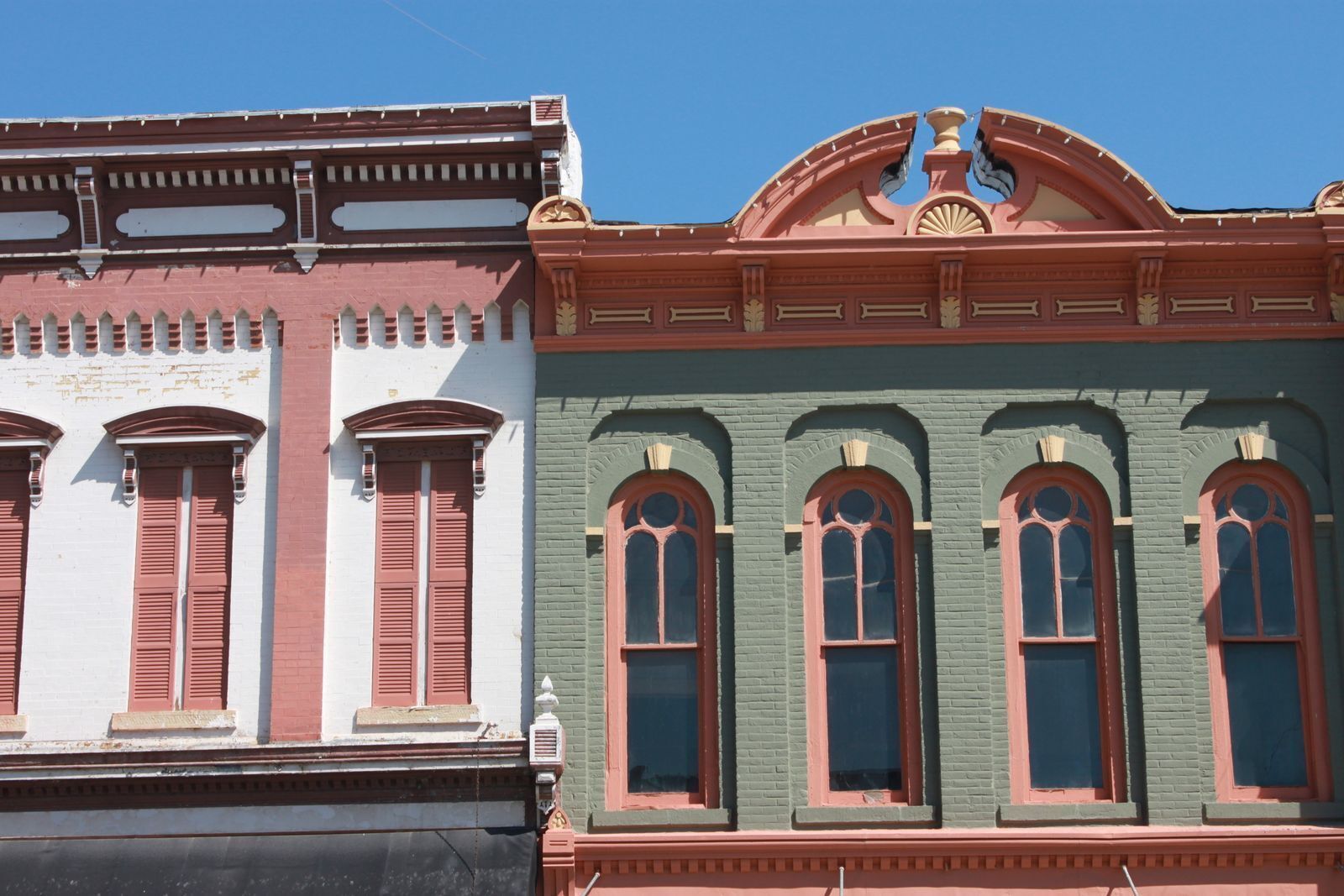
Since 1994, the Nebraska Main Street program has made a difference in the lives of countless Nebraska residents by providing communities the opportunity to revitalize their traditional downtown commercial business districts through economic development and historic preservation.

Main Street business owners, building owners, and local government officials have learned how to promote their downtown business districts, how to retain and enhance the authentic character of their existing historic commercial buildings, how to market their wares, how to attract new customers and better serve the ones they have.  The people, the projects, the history and the fun create the ENERGY found on Nebraska's Main Streets!

Together we have learned that the future of Main Street will likely be determined by the community's ability to find a sustainable economic purpose. Without ECONOMIC VITALITY, the Main Street goals of DESIGN, ORGANIZATION, and PROMOTION will not be achievable in most communities. Profound changes are occurring within America's retail and service sectors that are directly affecting our communities.


 Print   
 News & Information Minimize
Geneva Receives Funding for Phase I Downtown Revitalization Project - Thursday, June 11, 2009

Geneva Receives Funding for Phase I Downtown Revitalization Project

The Nebraska Department of Economic Development has awarded Community Development Block Grant (CDBG) funding to Geneva to wrap up the Phase I Planning portion of their downtown revitalization project. Geneva is using its $19,500 to review an existing blight designation, expand its existing redevelopment plan, and identify priority public and private projects for future development. Geneva’s downtown district originated more than 120 years ago, and aged structures, deteriorated building components, and outdated and/or undersized public infrastructure have been identified as conditions that endanger property or life within the downtown district.  For more than 20 years, the city has aggressively worked to maintain the community to ensure the safety and well-being of its citizens. In 1989, a comprehensive downtown improvement project resulted in new water mains, curbing and gutters, sidewalks and corner nodes for five downtown blocks. In 2005, two new water wells were installed and in 2006, a new SBR wastewater treatment facility was completed. This past March, the city council authorized initiation of a “hot spot” for the downtown area. CDBG reuse funds are available to retail businesses and manufacturers, and the Local Option Sales Tax passed in 2004 allocates 33.33 percent of proceeds for economic development. The city will contribute 6,000 to the project. Funding for this Phase I Project Implementation is drawn from the Department’s CDBG Economic Development Category. The CDBG Downtown Revitalization Category is open to incorporated Nebraska Municipalities of populations 20,000 or less, having earned designations as Economic Development Certified Communities, and having already adopted comprehensive plans, zoning and subdivision ordinances, building codes, code enforcement, and building permit processes. For information, contact Kevin Anderson at 800-426-6505, 402-471-3775, or kevin.anderson@nebraska.gov


Five Nebraska Communities Receive National Main Street Accreditation - Tuesday, June 02, 2009

Five Nebraska Communities Recieve National Main Street Accreditation

The Main Street programs in Beatrice, Fremont, Geneva, Sidney, and Wayne have been accredited as a 2009 National Main Street Program for meeting the commercial district revitalization performance standards set by the National Trust Main Street Center.  These programs join over 700 other Main Street™ revitalization programs being recognized as 2009 National Main Street Programs. Each year, the National Trust Main Street Center and its coordinating program partners announce the list of accredited National Main Street Programs around the country that have demonstrated their ability to follow the Main Street methodology.

“We congratulate this year’s accredited National Main Street Programs for meeting our established performance standards,” says Doug Loescher, director of the National Trust Main Street Center. “Rebuilding a district’s economic health and maintaining that success requires broad-based community involvement and support, in addition to establishing a solid organization with sound management that is committed to long-term success.”

The National Trust Main Street Center works in partnership with Coordinating Main Street Programs like Heritage Nebraska Main Street to identify the local programs that meet the National Trust Main Street Center’s ten basic performance standards. These standards set the benchmarks for measuring an individual Main Street program’s application of the Main Street Four-Point Approach® to commercial district revitalization. Evaluation criteria determines the communities that are building comprehensive and sustainable revitalization efforts and include standards such as developing a mission, fostering strong public-private partnerships, securing an operating budget, tracking economic progress, and preserving historic buildings.

Since 1980, the National Trust Main Street Center has helped hundreds of downtowns and neighborhood commercial districts across the nation reclaim the unique quality of life that only a thriving community center can provide. Through the Main Street Four-Point Approach® to commercial district revitalization, which combines historic preservation and economic development, the Center has forged a nationwide movement for the revival of America's historic and traditional commercial districts. The Center provides a nationwide membership network, comprehensive on-site consulting services, in-depth seminars and conferences, technical publications and training materials, and national advocacy for commercial districts.

The National Trust for Historic Preservation is a non-profit membership organization bringing people together to protect, enhance and enjoy the places that matter to them. By saving the places where great moments from history – and the important moments of everyday life – took place, the National Trust for Historic Preservation helps revitalize neighborhoods and communities, spark economic development and promote environmental sustainability. With headquarters in Washington, DC, nine regional and field offices, 29 historic sites, and partner organizations in all 50 states, the National Trust for Historic Preservation provides leadership, education, advocacy and resources to a national network of people, organizations and local communities committed to saving places, connecting us to our history and collectively shaping the future of America’s stories. For more information, visit www.preservationnation.org.


Heritage Nebraska Announces 2009 Hidden Treasures and Fading Places - Monday, May 04, 2009

Heritage Nebraska Announces 2009 Hidden Treasures and Fading Places

Heritage Nebraska, a new statewide historic preservation advocacy and education group, has released its first-ever list of Hidden Treasures and Fading Places.


The list of nine Hidden Treasures and 12 Fading Places was explained Saturday [May 2] during the organization’s first-ever statewide annual meeting at the Farm And Ranch Museum near Gering. Heritage Nebraska Executive Director J.L. Schmidt  said the purpose of the listing is to “help celebrate Nebraska’s unique heritage as evidenced through its built environment, culture and landscapes.”


Using nominations from preservationists and preservation groups, the lists were finalized by the organization’s Preservation Advisory Committee. “We want to make everyone aware of the dangers of losing some of these well-known places as well as the opportunities for sharing the lesser-known,” Schmidt said.


The Hidden Treasures:


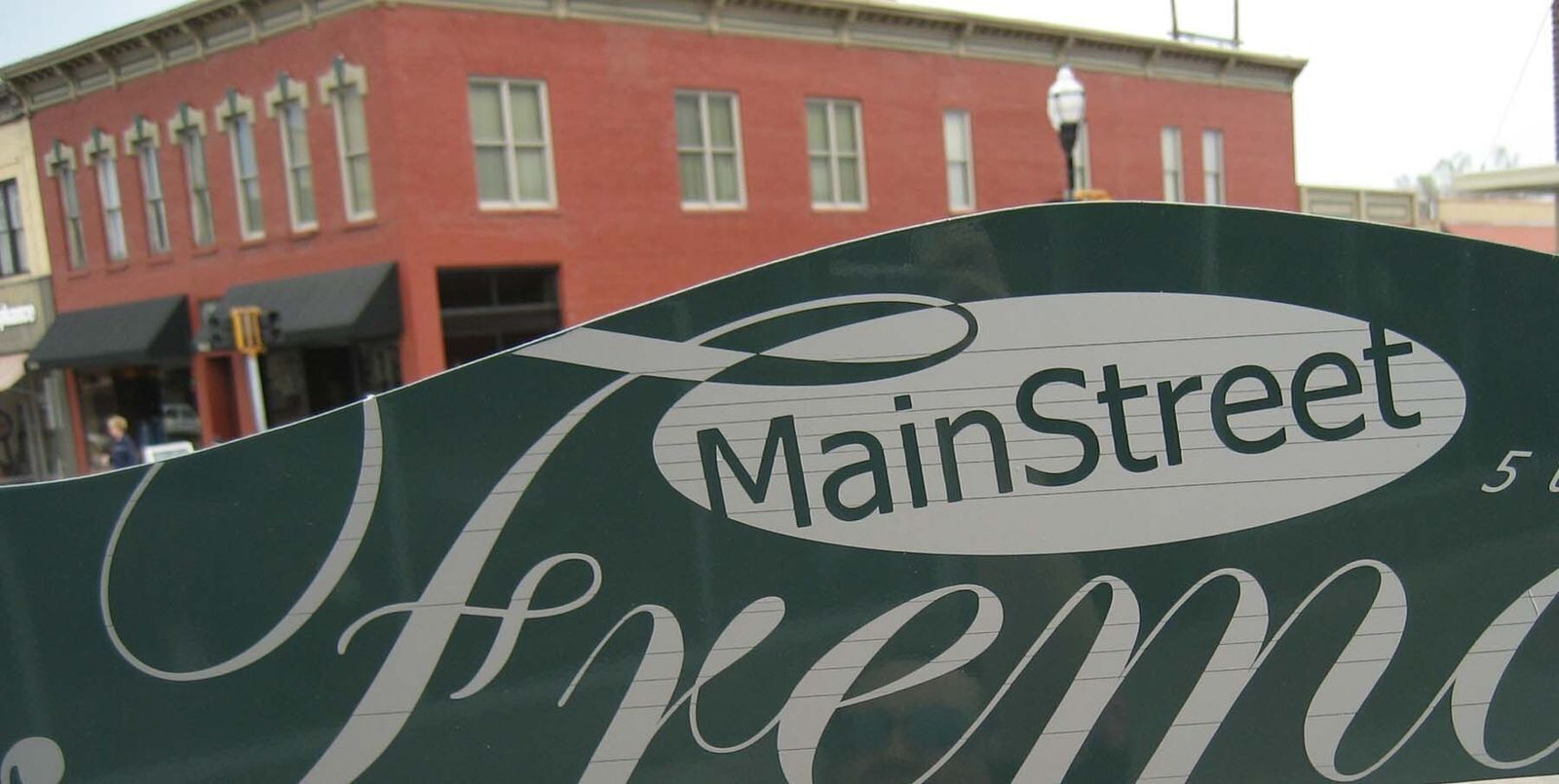
Downtown Fremont: This National Register District downtown was nominated by the Heritage Nebraska Main Street Advisory Committee. Fremont has had a Main Street program since 1994, before the state Main Street program started. Downtown Fremont has many late 1800’s era  buildings, several on-going preservation projects and a collection of antique and boutique shops as well as a mix of businesses from clothing to hardware and shoes. A recent streetscape project featuring historic reproduction streetlamps was seen as the icing on the cake.


Faling House, Cambridge Bed &Breakfast: Constructed from 1907 to 1910, the 10,000 square-foot house  built by William Faling in Cambridge is now used as a bed and breakfast. The neoclassic architecture, original fixtures and faux painting by Hansen and Willer were noted in the 1999 nomination to the National Register. Preservationists say the house is set apart from others by its size [10,000 square feet], the quantity and quality of the architectural detail, the faux paintings, Austrian leaded and beveled windows, millworks and original fixtures,.


Hamilton Avenue Methodist Church/Pentecostal Temple in Hastings: A fine example of a church built by African-Americans in outstate Nebraska. The original building is still standing with minor alterations and still serving a Black congregation. Set apart by its historical significance [potentially eligible for the National Register as a religious property significant in the area of settlement], the church was built in 1904 and has been in continuous use for more than 100 years. 


Joslyn Castle in Omaha: George and Sarah Joslyn constructed one of Nebraska’s greatest homes—a 35-room Scottish Baronial mansion atop a hill on Omaha’s outskirts – in 1903.

The 19,360 square foot four-story house was completed at a cost of $250,000 in 11 months and features a rich use of carved wood, stained glass, chiseled stone, mosaic tiles, and wrought iron. The Castle and the carriage house were built of Kansas silverdale limestone. It includes a reception hall, music room, ballroom, a library and gold drawing room. 


Hotel Chadron/ Olde Main Street Inn: Built by the O’Hanlon family in 1890, the elegant Chadron House was adorned with gold and green wallpaper, carpet from Brussels and marble washstands in each room. Some of those luxuries remain for modern day tourists who visit the place which has been run by three generations of innkeepers for more than 100 years. Once a booming business in the National Register District downtown, the hotel is among a handful of local sites that have remained in continuous service. 


Neihardt State Historic Site in Bancroft:  The community was the boyhood home of Nebraska Poet Laureate John G. Neihardt from 1900-1921. The town was the boyhood through age 40 home of Neihardt who lived in a house built in 1880. The Neihardt Center has preserved Neihardt’s study in an interpretive center opened in 1976. The property is presently owned by the Nebraska State Historical Society. Many buildings from the Neihardt era remain in the community.


Nicholas Street Historic District:  The National Register District on the edge of North Downtown Omaha represents one of three patterns of industrial development along railroad lines in Midwestern towns which were formed simultaneously with railroads. This district is not yet on the radar or in the typical websites or brochure racks. It is an area on the cusp of redevelopment and also home to Omaha’s Hot Shops, 50 art studios, four art galleries and many exhibition spaces.


Prairie Loft Center for Outdoor Agricultural Learning: This land near Hastings was once part of the farm operation at the state mental hospital, known as Ingleside and later as Hastings Regional Center. The farm was active before 1894 and until the late 1960s. The barn being used for the educational activities was built around 1931. The property is now being used to teach agriculture appreciation, outdoor education, cultural traditions and the wise use of natural resources. The farm once grew fields of cabbage and had banana trees in the greenhouses.


Prospect Hill Cemetery and Caretaker Residence: Some of the most prominent people in the development of Omaha are buried among the 15,000 graves dating back to 1858. The caretaker’s residence was built in 1918 at this north Omaha property. The plot itself was developed by Byron Reed, an early Omaha real estate developer. “Not only is this place of significant age, it is a collection of amazing stories of individuals that built our historic city,” says Omaha Landmarks Inc. President Paul Nelson. “It is an extremely beautiful place that is set apart from its surroundings. “


The Fading Places: 


Archeological sites statewide:  Archeological sites are being destroyed at alarming rates, representing a loss of chapters of Nebraska’s prehistory and early history. Development and urban expansion have resulted in the loss of countless sites. Proper protection through planning and zoning is lacking.  Sites are also being looted for artifacts using metal detectors and excavation, resulting in the diminishment of educational and scientific value. Public education about the importance of these sites needs to be strengthened.


Aurora Apothecary/Knights of Pythias Hall: Another important building endangered in this Hamilton County seat community that is still smarting from the demolition of an old bank to make way for a “modern” one and then the tragic fire loss of a true icon more than a year ago. The collapse of part of the roof of the Aurora Apothecary building has slowed plans for the sale and rehab of this important piece of the downtown tapestry. The scene is repeated often in other Nebraska downtowns.  


Boot Hill Cemetery and Camp Lookout in Sidney: Constructed and used between 1868 and 1889, the cemetery played a significant role in the history of the “Old West” when Sidney was: a major outpost for the U.S. Army and a shipping point to and from the Black Hills Gold Rush. The Cemetery was abandoned in 1889 with the graves holding  the legends, stories and memories of 89 saloons, gaming halls, brothels and all-night theaters on Front Street. Neglect and inappropriate use are being combated by a volunteer preservation effort.  Camp Lookout is definitely the oldest building in Sidney and perhaps the entire Panhandle. The structure was built in 1867 to house soldiers from Fort Sedgwick, Colorado, who set up an outpost along Lodgepole Creek to protect railroad workers pushing the Union Pacific across the plains. Later known as Sidney Barracks, it eventually became a lodging facility and then a private residence after the Army pulled out in 1894. Volunteers working on the Boot Hill project are trying to buy it from the willing owner.


Hastings Junior High School and endangered schools statewide: Preservationists in Hastings  say the threat to the now vacant building is critical. The building will be demolished if action is not taken soon for a viable re-use greater than a parking lot. The facility was designed by Hastings architect C.W. Way and is one of five remaining structures of that type. The building was built in 1917.  The scenario is repeated in other Nebraska communities where elementary, middle schools and old high schools are often abandoned for new structures and deemed surplus. It takes energy to construct a new building. It saves energy to preserve an old one.


Metz Hall in Elkhorn: Located on the “upper” Main Street in this community that recently became a part of Omaha, the wood building features a dance floor in a room highlighted by an inlaid wood ceiling. This turn-of-the Century structure reflects the grand era of brewing in Omaha when Metz, Krug, Willow Springs and Storz were the big four names in breweries. Metz Brewery closed because of the Prohibition in 1920 and the property was sold off. The Elkhorn hall has potential as an historic gem if it can be preserved.


Naval Ammunition Depot:  The 48,000 acre facility located in Adams and Clay Counties was the largest of four Navy ammunition depots in the US during World War II and produced a significant amount of ammunition for the armed forces. The facility was constructed six months after the Japanese attack on Pearl Harbor in 1942. There were 1,800 buildings and 1,500 concrete and earthen storage magazines. Two-hundred permanent industrial and administrative buildings and numerous temporary buildings and barracks were on site. The complex closed in 1966.The property is in excellent to poor condition and can be protected by adaptive re-use.


Oregon Trail   (statewide):  The “Great Platte River Road” is characterized by open vistas and even remnants of the road itself.  Transmission lines and cell towers often overwhelm the sense of place of the trail.  Natural erosion, development, and agricultural practices disturb the swales, ruts, and pathways where the trail existed.  Over many years, sites along the Oregon-California Trail in Nebraska have also been impacted by metal detecting and excavation.  These include road ranches and Pony Express stations.  Public education needs to be strengthened and tools such as donations of easements can benefit sites and landowners alike.


Pershing Auditorium West Wall Mural in Lincoln:  The 140 foot by 38 foot mural designed by Omaha artists Leonard Thiessen and William Hammon highlights the building completed in 1957. The mural features more than 763,000 pieces of tile, each cut one inch square and assembled in one foot by two foot sections at the Cambridge Tile Company in Cincinnati, Ohio. It was shipped to Lincoln and installed on the auditorium. Workers assembled the mural based on numbers on the backs of each piece rather than sight of the picture. The mural is in need of some repair. Its fate rests on the future of the building. 


Rural schools statewide such as the Logan Valley District 16 School of Cedar County:  Nominated by Daryle Urwiler of Pender, this school is actually located north of Laurel in northeast Nebraska. Built in 1929-1930 by the Israelson Construction Company of Hartington, the wooden building replaced the old structure that had been destroyed by a fire caused by an overheated stove in 1928. This building has indoor restrooms on each side of the entryway, separate library and store room, and a complete basement with an indoor water supply and a complete kitchen.  This building is in poor condition, but worthy or saving as are many others statewide.


Starke Round Barn: This unique property located near Red Cloud is the state’s largest and one of the largest in the nation. The building dates to 1902-1903 and is in fair condition but can only be maintained on a minimal basis due to lack of funds. The remote location and small population base is not enough to support the building as a local attraction. The nominee at Alley Poyner Macchietto Architecture in Omaha says it will be important to find a viable use for the building and the availability of funding options. Like many historic Great Plains resources in less populated areas, it may disappear without many people being aware that it ever existed.


Thorndike Hall in Cambridge: Thorndike Hall is in the second floor of a downtown building which is generally well preserved and features an elaborately painted ceiling by Hansen and Willer. The hall was constructed in 1907-1908 and last used in the 1940s and 50s. Thorndike Hall is where Glen Miller played in a band led by Cambridge native Tommy Watkins in 1924  to see if people enjoyed dancing to the new sound.  Watkins is credited as the person who met Miller in Denver and hired him to play trombone and arrange music. Miller eventually broke off and started his own band and moved to California.


Webster Telephone Exchange Building: Safety engineers have said the old telephone building, one of the area’s oldest landmarks, is in danger of collapsing. The Omaha Black History Museum, founded in 1975, had occupied the building but closed eight years ago. The biggest threat is a lack of funding to maintain and upgrade the building which was designed by prominent architect Thomas Kimball. A stabilization plan has been identified for Phase 1 and an adaptive re-use plan for the facility is complete.


$750,000 Awarded for Phase II Downtown Revitalization Projects - Monday, April 06, 2009

$750,000 Awarded for Phase II Downtown Revitalization Projects in 3 Main Street Communities


The Nebraska Department of Economic Development has awarded $750,000 in Community Development Block Grant (CDBG) funding to Nebraska City, Sidney and Wayne to initiate phase two downtown revitalization projects. The funding is awarded as follows:


•Nebraska City—$250,000 to make physical improvements to the pedestrian mall, bring infrastructure up to code standards, provide a revolving loan fund for future commercial façade improvements, and make improvements that meet historic preservation requirements.


Sidney—$250,000 to make physical improvements to the downtown gathering area, and streets and sidewalks. 


Wayne—$250,000 to install handicap ramps, improve commercial façades, and make physical improvements that bring infrastructure into compliance with the Americans with Disabilities Act.


The funding amount for this Phase II Project Implementation is drawn from the Department’s CDBG Economic Development Category, and based on the projects and goals identified in the comprehensive plans established by communities during Phase I when each was awarded $30,000 from the Department’s CDBG Planning Category.


The CDBG Downtown Revitalization Category is open to incorporated Nebraska municipalities of populations 20,000 or less, having earned designations as Economic Development Certified Communities, and having already adopted comprehensive plans, zoning and subdivision ordinances, building codes, code enforcement, and building permit processes.


For information, contact Steve Charleston at 800-426-6505, 402-471-3757, or steve.charleston@nebraska.gov


 Print   
 Calendar Minimize

  Today  View Date: 

JunJuly 2009Aug
SunMonTueWedThuFriSat
2829301234
567891011
12131415161718
19202122232425
2627282930311
2345678


View MonthView Month  View WeekView Week  List EventsList Events    Print   
Copyright 2009 HERITAGE NEBRASKA | Main Street   Terms Of Use  Privacy Statement
DotNetNuke® is copyright 2002-2009 by DotNetNuke Corporation